
An invitation to speak at an international cybercrime symposium grew into a broader Hansken visit to South Korea and Japan at the end of August. Hans Henseler, senior scientist digital forensics at the Netherlands Forensic Institute (NFI), was invited as a VIP guest and speaker at the International Symposium on Cyber Response (ISCR) in Seoul, where he addressed an audience of around 400 participants, mainly professionals working in digital investigations, on Hansken and the role of AI in digital forensics.
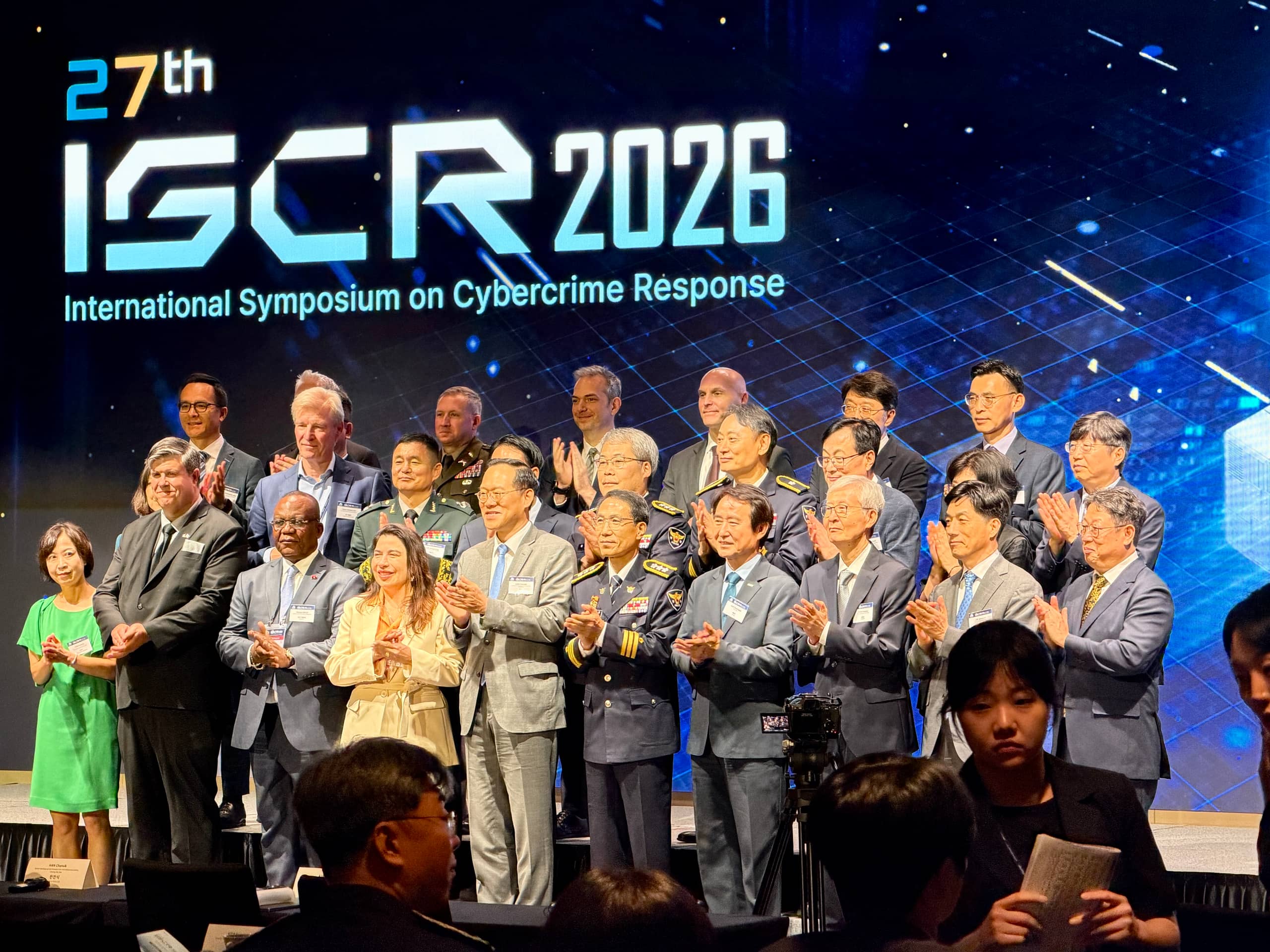
Image: © Hansken/NFI
Together with Kristien Siemons, Hansken Community Lead, the trip was used not only to present Hansken, but also to explore developments, needs and opportunities for cooperation across the international digital forensics community.
Insights from ISCR and further discussions with the KNPA
With contributions from organisations including the Australian Federal Police, U.S. Department of Justice, Interpol, Europol, Homeland Security, the Dutch Police, OpenAI, Google and, of course, the NFI, ISCR provided a high-level platform for sharing knowledge on current developments in cybercrime, AI and digital forensics.
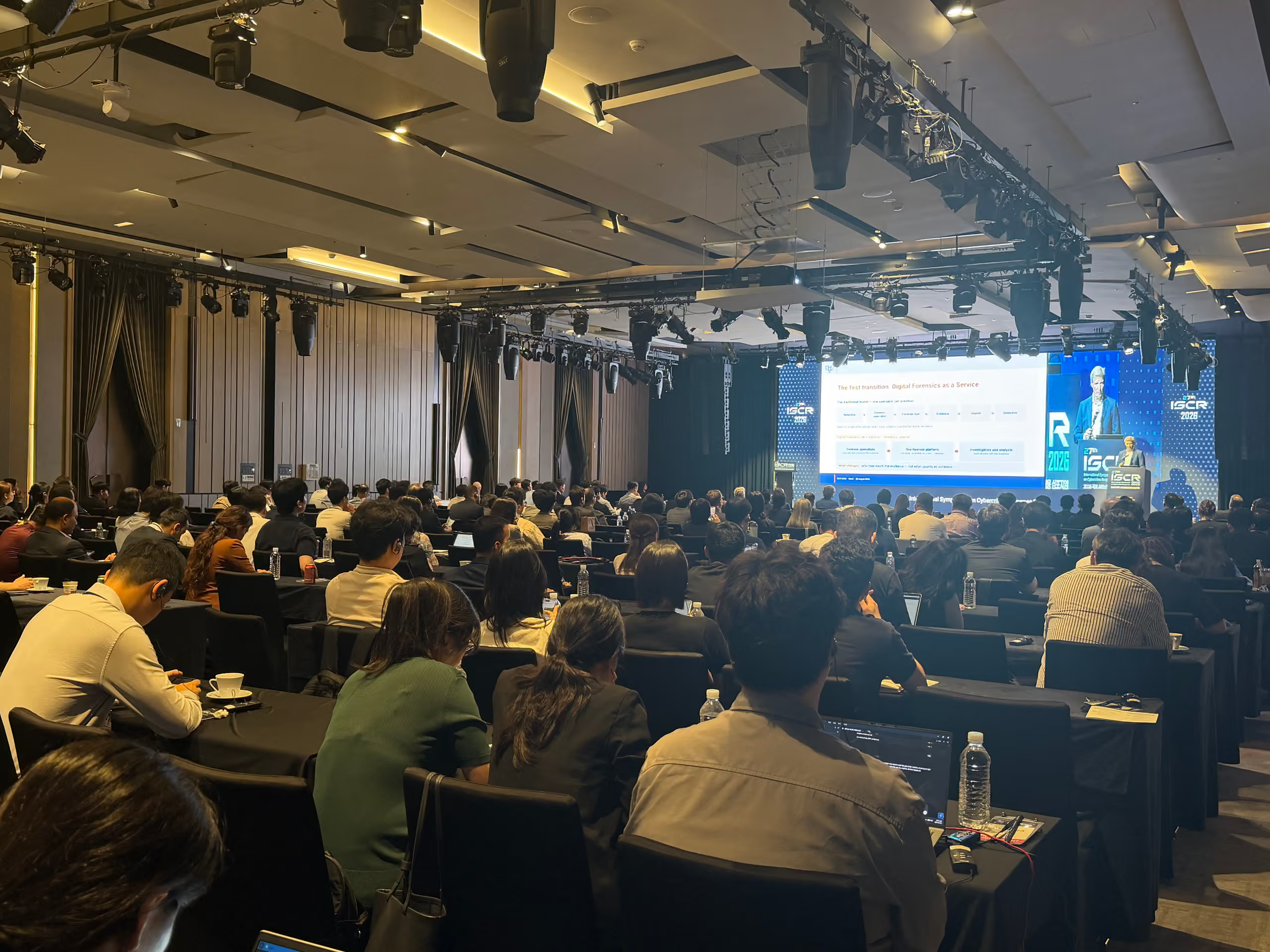
One clear message emerged: cybercrime, fraud and financial-economic crime are increasingly interconnected and are also becoming more closely intertwined with the public domain. At the same time, AI agents are playing a growing role in collecting and structuring evidence, while human judgement and expertise must remain essential. This is a development that closely aligns with the direction in which Hansken is evolving.
The Korean National Police Agency (KNPA) also organised an official bilateral meeting especially for us, attended by senior representatives and directors. In a highly professional setting, supported by a skilled interpreter, we discussed digital investigations, technological developments and possible next steps for cooperation with Hansken.
Strong operational links between academia and law enforcement
The visit also included a strong academic dimension. Hans gave lectures at Korea University, Hallym University and Sungkyunkwan University. It was particularly interesting to see how closely universities and the criminal justice system are connected in South Korea. Academic institutes develop tools that are used in operational investigations, while investigators are also trained by universities.
These links provide valuable opportunities for knowledge exchange and future cooperation.
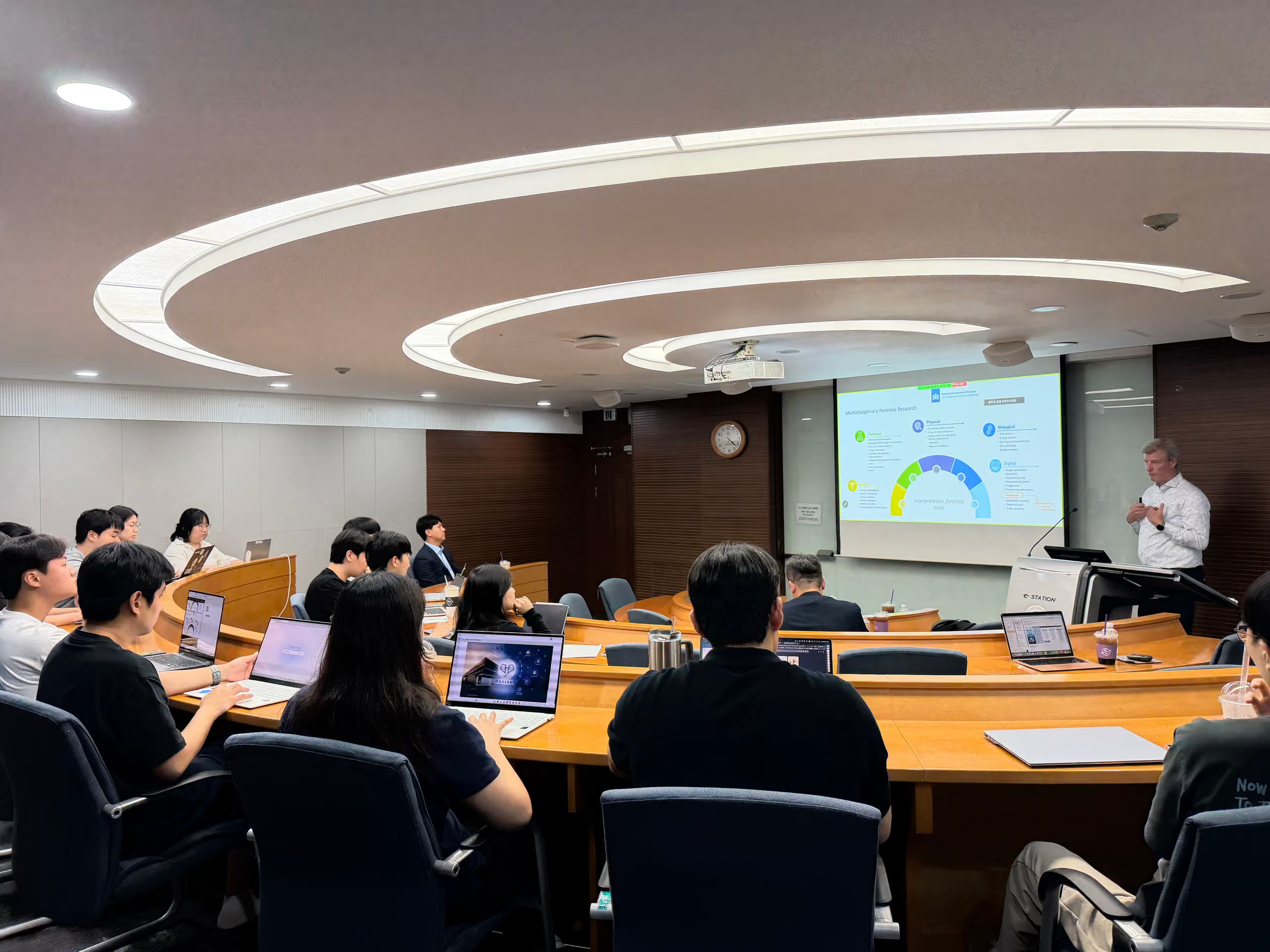
Image: © Hansken/NFI
Continuing the dialogue with the Japan National Police Agency
The trip concluded in Tokyo with a meeting with the Japan National Police Agency (NPA). Earlier this year, a Japanese delegation visited the NFI, where a first introduction to Hansken was made and the possibility of running a pilot was explored.
Being able to continue that conversation in Tokyo proved very useful. It gave us a clearer picture of where the NPA currently stands and showed very concretely that successful adoption is not only about technology, but also about knowledge, capacity, training and effective support. The meeting resulted in several concrete next steps that can help move the collaboration into its next phase.
Overall, the trip delivered much more than international visibility. It brought new insights, strengthened existing relationships and created concrete opportunities for follow-up. A valuable next step for Hansken and the NFI within the international world of digital forensics and cybercrime.